
The Breath Between Bites: A Poetic Exploration of Mindful Nourishment and the Rhythm of Wellness
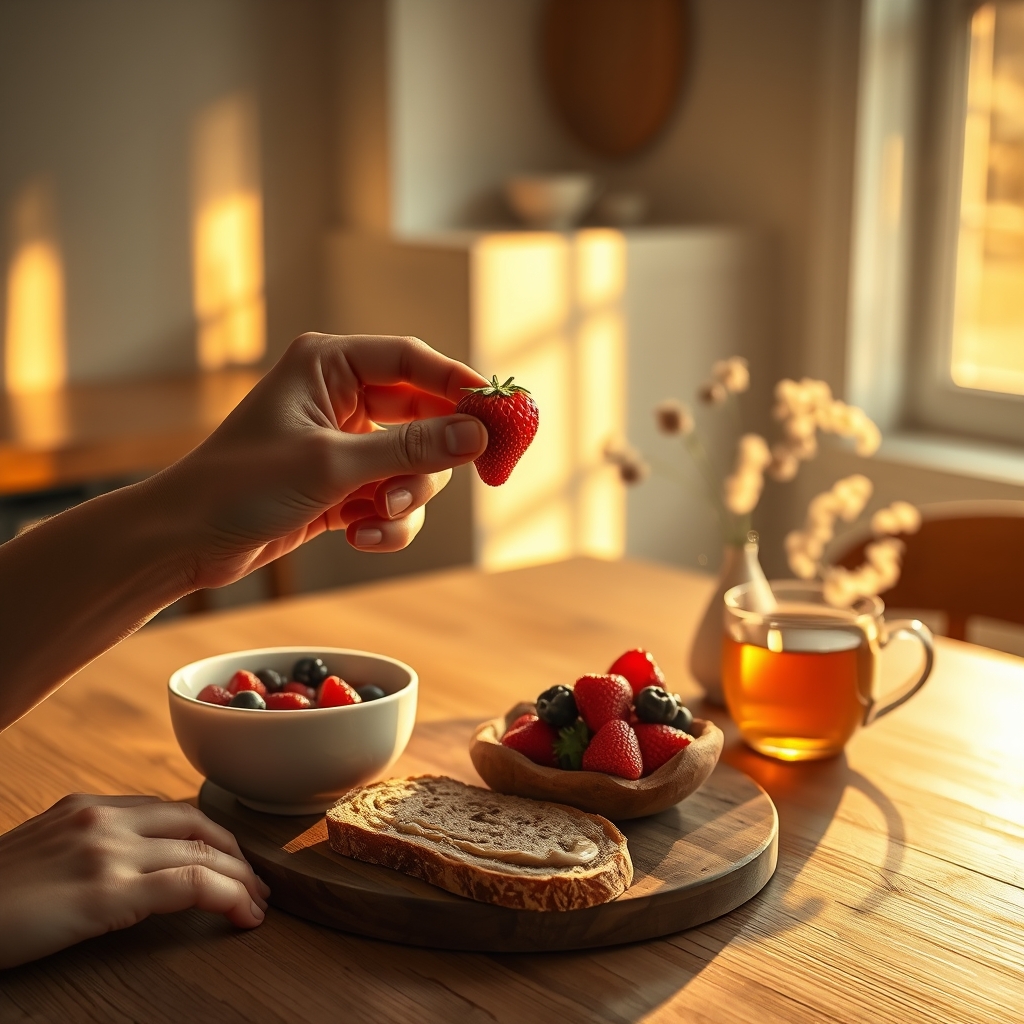
The first light of dawn spills across the kitchen counter, painting the room in hues of amber and rose. A single cup of tea steams gently, its tendrils curling into the air like whispered secrets. This moment—quiet, unhurried—is where the day begins, not with the clamor of alarms or the rush of obligations, but with the simple act of pausing. To breathe. To notice. To honor the body’s quiet plea for presence before the first bite is even taken.
The Sacred Pause
Mindful eating is not a trend; it is a homecoming. It is the act of returning to the table not as a stranger to our own hunger, but as a guest of honor, seated at the feast of our own existence. How often do we eat while scrolling, driving, or standing over the sink, our meals reduced to mere fuel, our senses dulled by distraction? The fork clinks against the plate, but the mind is elsewhere—trapped in the past, tangled in the future, or lost in the endless scroll of the present. What if, instead, we allowed each meal to become a meditation? What if we treated the act of nourishment as sacred as the breath that fills our lungs?
To eat mindfully is to engage in a dialogue with the body. It is to ask, “What do you need?” and to listen for the answer, not in the language of calories or macros, but in the subtle cues of hunger and satiety, in the way a certain food makes the heart feel light or the spirit feel heavy. It is to recognize that the body is not a machine to be fed on autopilot, but a living, breathing ecosystem that thrives on attention and care.
The Alchemy of Attention
Imagine holding a single strawberry in your palm. Not as a fleeting snack, but as a small, vibrant world unto itself. The weight of it, the texture—smooth yet slightly ribbed, the way the seeds catch the light like tiny constellations. The scent, sweet and faintly tart, rises to meet you before the first bite. And then, the taste: a burst of summer, a fleeting sweetness that lingers like a half-remembered dream. This is the alchemy of attention. When we slow down, when we truly see and taste and feel, even the simplest foods become revelations.
This practice is not about perfection. There will be days when the mind wanders, when the hands reach for the phone mid-bite, when the meal is devoured in haste. And that is okay. Mindfulness is not a destination; it is a rhythm, a dance of returning again and again to the present moment. It is the gentle reminder that wellness is not found in rigid rules or punishing regimens, but in the soft, steady pulse of awareness.
The Body as Compass
In a world that often treats the body as a project to be optimized, mindful eating offers a radical alternative: to trust. To trust that the body knows what it needs, that it speaks in whispers rather than shouts, and that its wisdom is deeper than any diet trend or wellness fad. This trust is not passive; it is an active, ongoing conversation. It is the willingness to notice when a certain food leaves you feeling sluggish, or when another brings a sense of vitality. It is the courage to honor cravings without judgment, to explore them with curiosity rather than fear.
Consider the way a plant turns toward the sun. It does not question its need for light; it simply grows in the direction of what sustains it. The body, too, leans toward what nourishes it—if we allow it the space to do so. This is not to say that every craving is a call for nourishment; sometimes, the body seeks comfort, distraction, or a fleeting pleasure. But even these moments are opportunities for awareness. What is the hunger beneath the hunger? Is it loneliness, stress, or fatigue? To ask these questions is to begin unraveling the threads of habit and conditioning, to step into a more conscious relationship with food—and with ourselves.
The Ripple Effect
When we eat mindfully, we do more than nourish the body; we cultivate a way of being that spills into every corner of life. The patience we learn at the table becomes patience in conversation. The presence we bring to our meals becomes presence in our work, our relationships, our moments of solitude. The body, after all, is not separate from the mind or the spirit. It is the vessel through which we experience the world, the bridge between the inner and the outer. To care for it is to care for the whole of ourselves.
This is not about restriction or deprivation. It is about abundance—the abundance of flavor, of texture, of the simple joy of being alive. It is about savoring the crisp bite of an apple, the creamy richness of avocado, the warm comfort of a bowl of soup. It is about recognizing that every meal is an opportunity to practice gratitude, to celebrate the earth that grew the food, the hands that prepared it, and the body that receives it.
The Unfolding Journey
There is no finish line in this journey, no final state of perfect wellness to achieve. There is only the unfolding, the daily practice of returning to the present moment, of listening to the body’s quiet wisdom, and of nourishing not just the physical form, but the soul that inhabits it. Some days, this will feel effortless, a natural rhythm like the rise and fall of the breath. Other days, it will feel like a struggle, a battle against old habits and ingrained patterns. But even in the struggle, there is grace. Even in the stumbling, there is growth.
Perhaps the greatest gift of mindful eating is the way it teaches us to slow down in a world that demands speed. To savor in a culture that glorifies consumption. To listen in an age of noise. It is a rebellion, in its own quiet way—a refusal to treat the body as a machine, the meal as a chore, or the moment as something to be rushed through. It is an invitation to remember that wellness is not a destination, but a way of traveling. And that the most nourishing meals are not just those that fill the stomach, but those that feed the soul.
The next time you sit down to eat, take a breath. Look at your food. Smell it. Taste it. Let it be more than sustenance—let it be a moment of connection, of presence, of love. For in the end, the way we eat is the way we live. And every bite is an opportunity to choose how that life will unfold.