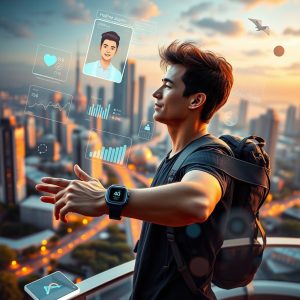
The Pulse of Prevention: How Integrated Care Pathways and Wearable Tech Are Crafting a Future of Proactive Health

Imagine waking up to a world where your health isn’t just managed—it’s anticipated. A world where your body’s whispers are heard before they become shouts, where every heartbeat, every breath, every subtle shift in your well-being is met with a tailored response. This isn’t the distant future; it’s the here and now, where personalized preventive care and precision health monitoring are converging to redefine what it means to be truly well. The revolution isn’t just coming—it’s already pulsing through the veins of modern healthcare, and it’s time to feel its rhythm.
The Heartbeat of Change: Wearable Tech as Your Health’s Co-Pilot
Close your eyes and picture this: a sleek, unobtrusive device resting on your wrist, not just counting steps or tracking sleep, but acting as a silent guardian of your vitality. This is the power of wearable health integration, where technology doesn’t just observe—it engages. These devices are no longer passive observers; they’re active participants in your health journey, translating raw data into data-driven health insights that illuminate the path ahead. A sudden spike in heart rate? Your wearable doesn’t just alert you—it suggests a breathing exercise, nudges you to hydrate, or even connects you to a digital health coach for real-time guidance. It’s like having a personal health concierge, one that never sleeps, never tires, and always has your back.
But the magic doesn’t stop at the wrist. From smart scales that analyze body composition to continuous glucose monitors that offer a window into metabolic health, these tools are weaving a tapestry of insights that were once invisible. They’re turning the abstract—like stress levels or recovery rates—into tangible, actionable data. And with every byte of information, they’re empowering you to take the reins of your well-being like never before.
The Symphony of Care: How Integrated Pathways Harmonize Your Health
Healthcare has long been a fragmented experience—disjointed appointments, siloed specialists, and a maze of advice that often leaves patients feeling lost. But what if care could flow seamlessly, like a symphony where every instrument plays in perfect harmony? Enter integrated care pathways, the backbone of patient-centric care delivery. These pathways are designed to break down the walls between disciplines, creating a cohesive, personalized roadmap for your health. Whether you’re managing a chronic condition or simply striving for optimal wellness, integrated care ensures that every provider, every intervention, and every piece of data works in concert to support your unique needs.
Imagine a world where your primary care physician, nutritionist, mental health therapist, and fitness coach are all on the same page—literally. A world where your remote health monitoring data is instantly accessible to your care team, allowing them to adjust your plan in real time. This isn’t just convenient; it’s transformative. It means fewer gaps in care, fewer miscommunications, and a healthcare experience that feels less like a series of transactions and more like a partnership. And at the center of it all? You. Because true wellness isn’t about treating symptoms—it’s about nurturing the whole person.
The Human Touch in a Digital World: The Rise of Experiential Wellness
In an era where screens dominate our attention, it’s easy to assume that technology is the sole driver of this health revolution. But the most powerful innovations aren’t just digital—they’re deeply human. Experiential wellness programs are bridging the gap between data and lived experience, turning health into something you can feel, not just measure. Picture a virtual wellness consultation where your coach doesn’t just talk at you but engages you in a dynamic, interactive session. Or a gamified health improvement app that turns your fitness goals into an adventure, complete with challenges, rewards, and a community of like-minded explorers. These programs aren’t just about tracking progress; they’re about making the journey joyful, meaningful, and deeply personal.
And then there’s the power of behavioral change therapy, where science meets soul. These interventions don’t just tell you what to do—they help you understand why you do what you do. They uncover the hidden triggers behind unhealthy habits and replace them with strategies that stick. Whether it’s through mindfulness practices, cognitive behavioral techniques, or simply the accountability of a digital coach, these tools are helping people rewrite their stories, one healthy choice at a time.
The Proactive Paradigm: From Reactive to Preventive
For too long, healthcare has been a reactive endeavor—waiting for illness to strike before taking action. But what if we could flip the script? What if we could move from treating disease to preventing it altogether? This is the promise of proactive symptom tracking and preventive lifestyle interventions. By leveraging real-time health analytics, we can now detect subtle shifts in our health long before they escalate into something more serious. A slight increase in blood pressure, a dip in sleep quality, or a change in mood patterns—these aren’t just data points; they’re early warning signs, opportunities to course-correct before a storm hits.
And it’s not just about avoiding illness. It’s about thriving. Chronic disease management is being revolutionized by this proactive approach, where patients are no longer passive recipients of care but active participants in their own healing. Wearable tech, digital coaching, and integrated care pathways are giving people the tools they need to manage conditions like diabetes, hypertension, and heart disease with confidence and control. They’re turning patients into partners, and partners into advocates for their own health.
The Mind-Body Connection: Tracking What Matters Most
Wellness isn’t just about the body—it’s about the mind, too. And in a world where stress, anxiety, and burnout are all too common, mental well-being tracking is emerging as a critical component of holistic health. Imagine a world where your wearable doesn’t just monitor your physical activity but also tracks your stress levels, offering personalized interventions when it senses you’re overwhelmed. Or a virtual wellness consultation where a therapist uses your biometric data to tailor mindfulness exercises to your unique needs. This is the future of mental health—one where technology and humanity come together to nurture resilience, balance, and inner peace.
But the mind-body connection goes even deeper. Research is increasingly showing that our mental state has a profound impact on our physical health, and vice versa. Chronic stress can weaken the immune system, poor sleep can disrupt metabolism, and unmanaged anxiety can exacerbate chronic conditions. By tracking both mental and physical well-being, we can uncover these hidden connections and address them holistically. It’s not just about treating symptoms; it’s about fostering a state of harmony where mind and body thrive together.
As the sun rises on this new era of health, one thing is clear: the future isn’t just about living longer—it’s about living better. It’s about a world where every individual is empowered to take control of their well-being, where care is personalized, proactive, and deeply human. The tools are here, the knowledge is within reach, and the possibilities are endless. The question is no longer whether we can transform healthcare—it’s whether we’re ready to embrace the journey. And if we are, the path ahead isn’t just promising; it’s luminous, pulsing with the promise of a healthier, happier, and more vibrant life for all.