
The Breath of Nourishment: How the Rhythm of Eating Shapes the Soul’s Landscape
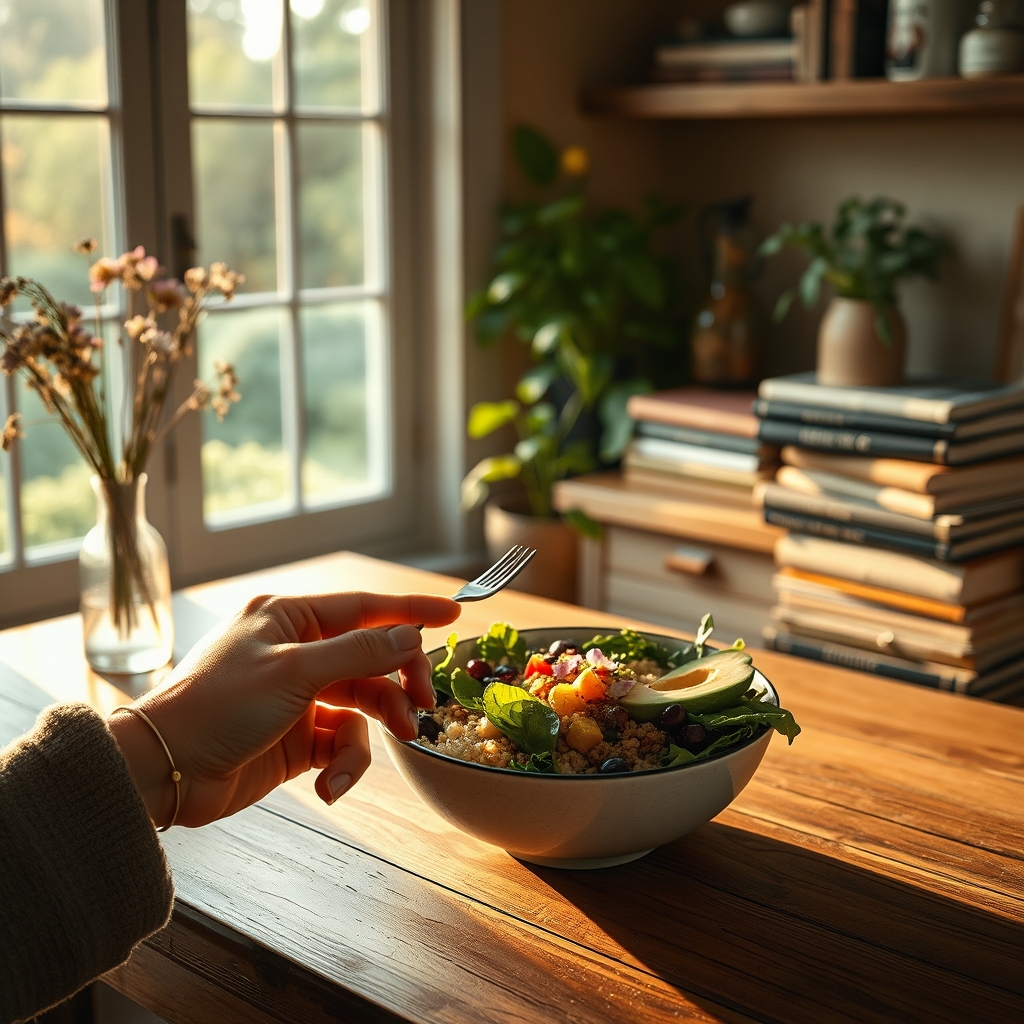
There is a quiet magic in the way a meal unfolds—not just in the flavors that dance upon the tongue, but in the space between each bite, where the body and soul converse in hushed tones. To eat is not merely to consume; it is to participate in an ancient ritual, one that connects us to the earth, to the hands that tilled the soil, to the sun that coaxed the seeds into life. Yet in the rush of modern living, this sacred exchange is often reduced to a hurried transaction, a means to an end rather than an end in itself. What if we paused long enough to listen—to the whispers of hunger, to the sighs of satiety, to the silent poetry of nourishment?
The Alchemy of Presence
Mindful eating is not a trend; it is a homecoming. It is the art of returning to the body’s innate wisdom, of recognizing that every morsel carries with it a story—of growth, of labor, of transformation. When we slow down, we begin to notice the subtle shifts: the way a deep breath before the first bite softens the edges of the day, the way chewing becomes a meditation, the way the flavors bloom like flowers in the garden of awareness. This is not about restriction or rules; it is about reverence. It is about allowing the act of eating to become a practice of presence, a way to anchor the mind in the here and now.
Consider the way a child eats—with unbridled curiosity, with fingers that explore textures, with eyes that widen at the sight of vibrant colors. Somewhere along the way, many of us lose this sense of wonder, replacing it with efficiency, with multitasking, with the numbing hum of distraction. But what if we reclaimed that childlike awe? What if we approached each meal as if it were the first, tasting not just with the mouth, but with the heart?
The Body as a Compass
The body speaks in whispers, not shouts. It tells us when it is hungry, when it is full, when it craves something more than just calories—when it yearns for connection, for comfort, for joy. Yet how often do we ignore these whispers, drowning them out with the noise of external cues: the clock telling us it’s time to eat, the portion sizes dictated by packaging, the fleeting trends that promise quick fixes? To eat mindfully is to tune into these inner signals, to trust the body’s intelligence rather than override it with rigid rules or fleeting fads.
This is not to say that structure has no place in nourishment. Intermittent fasting, for instance, can be a powerful tool for some—a way to reset the body’s rhythms, to cultivate discipline, to create space for introspection. But even here, the key lies in listening. Does the fast feel like a gentle ebb and flow, or does it become another form of self-denial? Does it serve the body, or does it serve the ego? The answers lie not in dogma, but in the quiet dialogue between the self and the soul.
The Garden of Nourishment
There is a reason why plant-based diets have taken root in the collective consciousness. They are not just about health; they are about harmony. To eat in a way that honors the earth is to acknowledge our place within the web of life, to recognize that our choices ripple outward, touching the soil, the water, the air. A meal rich in whole, unprocessed foods is a meal that carries the essence of the earth within it—the vitality of the sun, the richness of the rain, the resilience of the roots.
But even here, there is no one-size-fits-all. The body is a unique ecosystem, and what nourishes one may not nourish another. Some thrive on the lightness of greens and grains, while others find strength in the grounding energy of proteins and fats. The key is not to adhere to a label, but to explore—to experiment, to observe, to listen. To ask not just what should I eat, but how does this food make me feel? Does it energize me, or does it weigh me down? Does it bring me joy, or does it leave me craving more?
The Unseen Threads of Wellness
Wellness is not a destination; it is a tapestry, woven from countless threads—some visible, some hidden. There is the thread of movement, the way a morning yoga flow or a brisk walk can untangle the knots of the mind. There is the thread of hydration, the way water flows through the body like a river, carrying away what no longer serves. There is the thread of rest, the way sleep knits together the frayed edges of the day. And then there is the thread of nourishment, the way food becomes not just fuel, but medicine for the soul.
But perhaps the most vital thread of all is the one we often overlook: the thread of connection. To share a meal is to share a piece of ourselves—our stories, our laughter, our vulnerabilities. In a world that often feels fragmented, the table becomes a place of reunion, a sanctuary where we can remember what it means to be human. This, too, is a form of nourishment, one that feeds not just the body, but the spirit.
As the seasons turn and the days unfold, may we remember that wellness is not a checklist to be completed, but a dance to be lived. It is in the pause before the first bite, in the gratitude for the hands that prepared the meal, in the quiet joy of savoring each moment. It is in the recognition that every choice, no matter how small, is a brushstroke on the canvas of our lives. And when we eat with intention, when we move with awareness, when we live with reverence, we create not just health, but art.