
The Hidden Geometry of Nourishment: How Sacred Patterns Shape Our Wellness
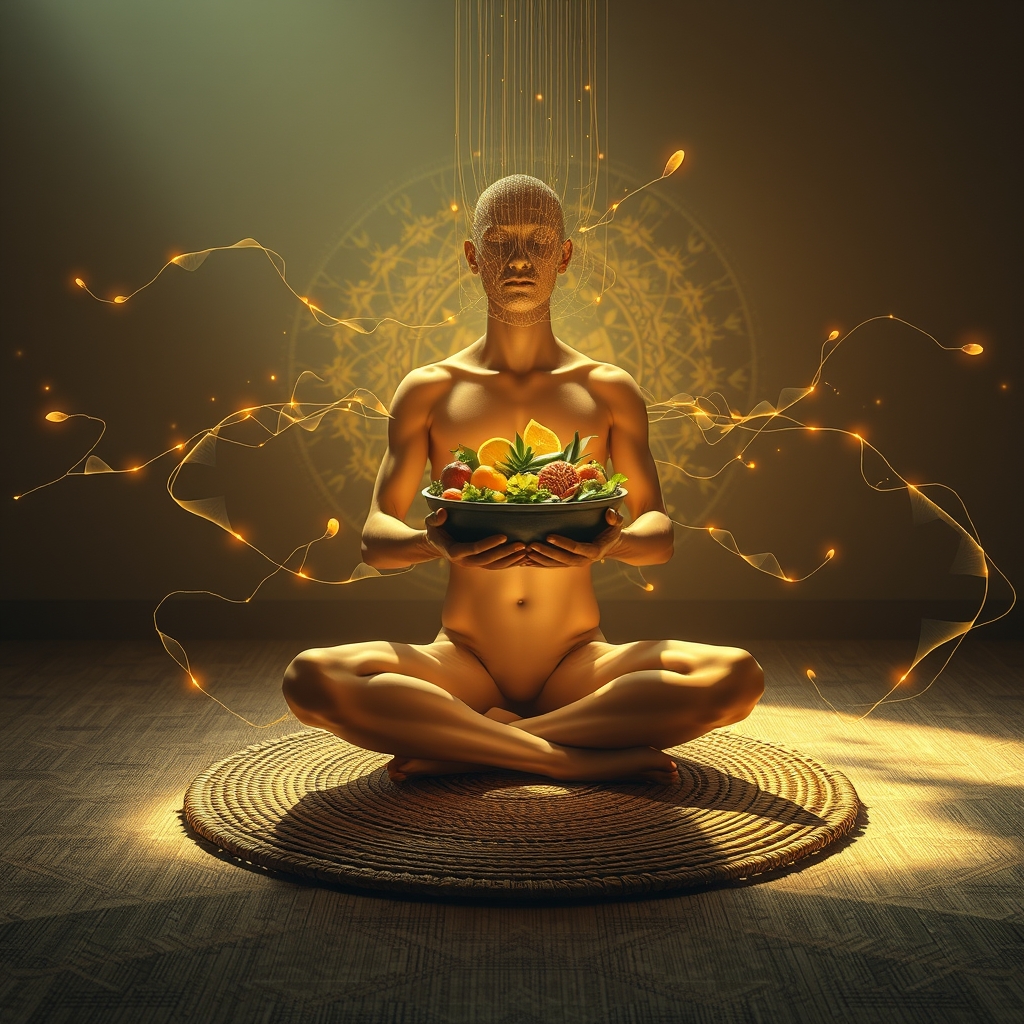
The body is not a machine, though we often treat it as one—fueling it with precision, timing its rest, measuring its output like a factory assembly line. But what if wellness is less about the mechanics of calories and reps, and more about the invisible geometry that orchestrates our hunger, our energy, our very sense of being? What if the way we nourish ourselves is not just a matter of science, but of sacred patterns woven into the fabric of our days?
The Fractal Nature of Hunger
Consider the fractal—a shape that repeats itself at every scale, from the branching of rivers to the veins in a leaf. Our hunger, too, follows a fractal logic. It is not a linear demand, a simple equation of calories in and out, but a living, breathing rhythm that shifts with the seasons, the moon, the quiet hum of our emotions. One day, we wake ravenous, as if the body remembers an ancient feast; the next, we barely touch our plate, as though the soul has turned inward, fasting in the language of silence.
Mindful eating is not just about chewing slowly or savoring each bite—though these are beautiful practices. It is about recognizing that hunger is a conversation, not a command. It is the body’s way of whispering its needs, its fears, its longings. When we pause to listen, we begin to see the fractal patterns: the way a single meal echoes through the hours, the way a week of nourishment spirals into a lifetime of vitality. The plate becomes a mandala, each ingredient a stroke in the sacred geometry of sustenance.
The Alchemy of Stillness in Movement
We live in a culture that glorifies the grind—the sweat, the burn, the relentless pursuit of progress. But what if the most transformative movements are the ones we make in stillness? A morning yoga flow is not just a sequence of poses; it is a meditation on the body’s architecture, a way of tracing the hidden lines that connect breath to bone, muscle to memory. Each stretch is an act of devotion, a silent prayer to the temple of the self.
Strength training, too, is a form of sacred geometry. The way we lift, the way we hold, the way we breathe through the resistance—these are not just physical acts but rituals of alignment. The barbell becomes a compass, pointing us toward the center of our own power. And in that center, we find not just muscle, but meaning. The body remembers what the mind forgets: that strength is not just about force, but about presence. That every rep is a brushstroke in the portrait of our becoming.
The Labyrinth of the Gut
We speak of the gut as a second brain, but it is more like a labyrinth—a winding, mysterious passage where intuition and biology intertwine. The microbiome is not just a collection of bacteria; it is a living ecosystem, a garden that thrives or withers depending on the seeds we sow. The foods we choose, the stress we carry, the sleep we prioritize—all of these are threads in the tapestry of our gut health, each one shaping the landscape within.
When we eat mindfully, we are not just feeding ourselves; we are tending to this inner garden. A plant-based meal is not just a choice of ingredients, but a gesture of harmony—a way of aligning our bodies with the earth’s own rhythms. The probiotics we take, the fiber we consume, the water we drink—these are not just supplements, but offerings to the unseen world within. And in return, the gut speaks to us in the language of cravings, of energy, of mood. To listen is to begin to understand the sacred dialogue between what we eat and who we are.
The Rhythm of Renewal
Intermittent fasting is often framed as a tool for weight loss, but its true power lies in its ability to reset the body’s inner clock. It is a practice of surrender, a way of stepping back from the constant noise of consumption and allowing the body to remember its own wisdom. In the space between meals, something magical happens: the cells begin to cleanse, the mind begins to clear, the spirit begins to rise. Fasting is not about deprivation; it is about revelation—the slow unfolding of what it means to be truly nourished.
Hydration, too, is a rhythm. Water is not just a substance we drink; it is a current that carries us through the day. To sip mindfully is to acknowledge the flow of life itself, the way it moves through us, cleansing, renewing, connecting. The body is mostly water, after all—we are not solid beings, but fluid, ever-changing, ever-adapting. To honor that fluidity is to honor the sacred geometry of our own existence.
The Unseen Threads of Holistic Wellness
Wellness is not a destination, but a tapestry—a weaving of threads that are visible and invisible, physical and spiritual, individual and universal. The low-carb recipe we prepare, the high-protein snack we reach for, the morning yoga flow we commit to—these are not just actions, but stitches in the fabric of our well-being. Each one holds the potential to shift the entire pattern, to create something new, something whole.
And yet, the most powerful threads are often the ones we cannot see: the breath between bites, the pause before movement, the silence in which we listen to the body’s quiet wisdom. These are the moments that shape us, that remind us that wellness is not about perfection, but about presence. It is not about following a trend, but about finding the rhythm that is uniquely ours.
Perhaps the greatest lesson of all is this: that the body is not a project to be fixed, but a poem to be lived. Its lines are written in the foods we choose, the movements we make, the stillness we embrace. And in the sacred geometry of our days, we find not just health, but holiness—the quiet, radiant truth of what it means to be alive, to be nourished, to be whole.