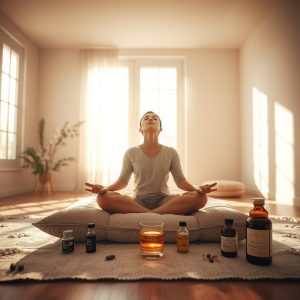
The Luminous Threshold: How the Art of Pausing Transforms the Landscape of Wellness

The body is not a machine, though we often treat it as one—fueling it with precision, timing its movements, and expecting it to perform without pause. Yet, beneath the surface of routines and regimens, there is a quiet intelligence at work, one that thrives not on relentless optimization but on the art of pausing. To step into wellness is not merely to follow a plan but to learn the language of stillness, to recognize the thresholds where transformation begins.
The Sacred Interval
Consider the space between breaths, the moment before the next bite, the silence after a stretch. These are not empty gaps but luminous thresholds, where the body whispers its needs and the mind learns to listen. Mindful eating, for instance, is not about restriction but about reclaiming these intervals—the pause before lifting the fork, the deliberate chew, the awareness of flavor dissolving into nourishment. It is in these moments that we remember: wellness is not a destination but a rhythm, a dance between action and stillness.
Intermittent fasting, too, reveals the power of the pause. The body, when given time to rest from digestion, enters a state of quiet recalibration. It is not just about the hours without food but about the clarity that emerges when we step away from the noise of constant consumption. The hunger becomes a guide, not an enemy, teaching us to distinguish between the body’s true needs and the mind’s restless cravings.
The Alchemy of Small Gestures
Wellness is often portrayed as a grand transformation, a dramatic overhaul of habits and routines. But the truth is far more subtle. It is in the small gestures—the morning stretch that awakens the spine, the glass of water sipped before coffee, the deep breath taken before a meal—that the alchemy of well-being unfolds. These are not grand acts but quiet rebellions against the rush of modern life, tiny anchors that root us in the present.
A home workout routine, for example, is not about the intensity of the exercise but the intention behind it. The way the body moves in the quiet of a living room, the way the breath syncs with movement, the way the mind softens into the rhythm—these are the moments where strength is not just built but felt. It is a conversation between body and soul, a dialogue that deepens with each repetition.
The Wisdom of the Unseen
There is a hidden ecosystem within us, one that thrives on balance and harmony. Gut health, often overlooked, is a testament to this unseen wisdom. The bacteria in our digestive tract are not mere passengers but active participants in our well-being, influencing everything from mood to immunity. To tend to this inner garden is to acknowledge that wellness is not just about what we consume but how we nurture the life within us.
Supplements, when chosen mindfully, can be tools of this nurturing—a way to support the body’s natural rhythms rather than override them. Probiotics, for instance, are not a quick fix but a gentle reminder that the body is a living, breathing ecosystem, one that flourishes when given the right conditions. The same can be said for hydration, that most elemental of needs. Water is not just a drink but a lifeline, a way to flush out toxins, lubricate joints, and keep the mind sharp. To meet our daily hydration goals is to honor the body’s most basic yet profound requirement.
The Poetry of Movement
Strength training is often seen as a means to an end—to build muscle, to burn fat, to sculpt the body. But when approached with mindfulness, it becomes something far richer: a meditation in motion. The way the weights feel in the hands, the way the muscles engage and release, the way the breath guides each lift—these are not just physical sensations but moments of connection, where the body remembers its own power.
Functional fitness, too, is a celebration of this connection. It is not about isolated movements but about training the body for life—to lift, to carry, to bend, to reach. It is a reminder that fitness is not just about aesthetics but about resilience, about the ability to move through the world with ease and grace. And when paired with a morning yoga flow, it becomes a ritual of awakening, a way to greet the day with intention and presence.
The Unfolding Path
Wellness is not a straight line but a spiral, a journey that circles back on itself, each loop bringing deeper understanding. A plant-based diet, for instance, is not just about the food on the plate but about the relationship with the earth, the awareness of where nourishment comes from. It is a way of eating that honors both the body and the planet, a reminder that wellness is not just personal but collective.
Low-carb recipes, too, can be a path to this awareness. They are not about deprivation but about rediscovering the flavors and textures of whole foods, about learning to savor the simplicity of a meal prepared with care. And when combined with a personalized nutrition plan, they become a way to listen to the body’s unique needs, to honor its rhythms rather than impose external rules.
The journey toward well-being is not about perfection but about presence. It is about learning to pause, to listen, to move with intention. It is about recognizing that the body is not a machine to be optimized but a living, breathing entity, one that thrives on care, on stillness, on the quiet moments where transformation begins. And in these moments, we find not just health but a deeper connection to ourselves, to the world around us, to the luminous threshold where wellness truly begins.