The River Within: How Hydration Flows Through the Landscape of Wellness
The body is a river, not a reservoir. It does not hoard; it moves. Every cell, every sinew, every quiet breath is part of a current that carries life forward, and at the heart of this flow is something so simple, so elemental, that we often overlook its power: water. Not as a mere substance to quench thirst, but as the silent architect of vitality, the unseen hand that shapes the contours of our well-being.
The Sacred Geometry of Hydration
There is a geometry to hydration that goes beyond the eight-glass rule. It is not just about quantity, but rhythm—the way water enters the body, moves through it, and leaves, carrying with it the residue of yesterday’s fatigue, the toxins of stress, the weight of stagnation. When we drink mindfully, we do not merely consume; we participate in an ancient dance of renewal. The first sip in the morning is not just liquid; it is a signal to the body that the night’s stillness has ended, that the day’s unfolding has begun. It is the first note in a symphony of wakefulness.
Yet how often do we rush through this ritual? How often do we gulp down water as if it were a task to be checked off, rather than a sacred exchange? The body remembers. It remembers the times we listened to its whispers—when we paused to drink because our skin felt parched, when we chose herbal tea over caffeine because our nerves hummed with tension. These are not just acts of self-care; they are acts of reverence, tiny acknowledgments that the body is not a machine to be fueled, but a living landscape to be tended.
The Alchemy of Absorption
Water does not work alone. It is the medium through which nutrients dissolve, through which waste is carried away, through which every metabolic process finds its rhythm. But its power is not just in what it carries; it is in how it transforms. A body well-hydrated is a body in motion—joints glide, muscles contract with ease, the mind sharpens like a blade honed on stone. Dehydration, on the other hand, is not just thirst; it is a slow thickening of the blood, a dulling of the senses, a quiet erosion of energy. It is the difference between a river carving canyons and a puddle evaporating in the sun.
Consider the gut, that intricate ecosystem where digestion and intuition intertwine. Water is the great mediator here, ensuring that the delicate balance of bacteria thrives, that the lining of the intestines remains supple, that the signals between body and brain flow unimpeded. When we neglect hydration, we do not just slow digestion; we disrupt the conversation between body and soul. The bloating, the sluggishness, the foggy mind—these are not just physical symptoms; they are the body’s way of saying, I am not flowing as I should.
The Ritual of the Glass
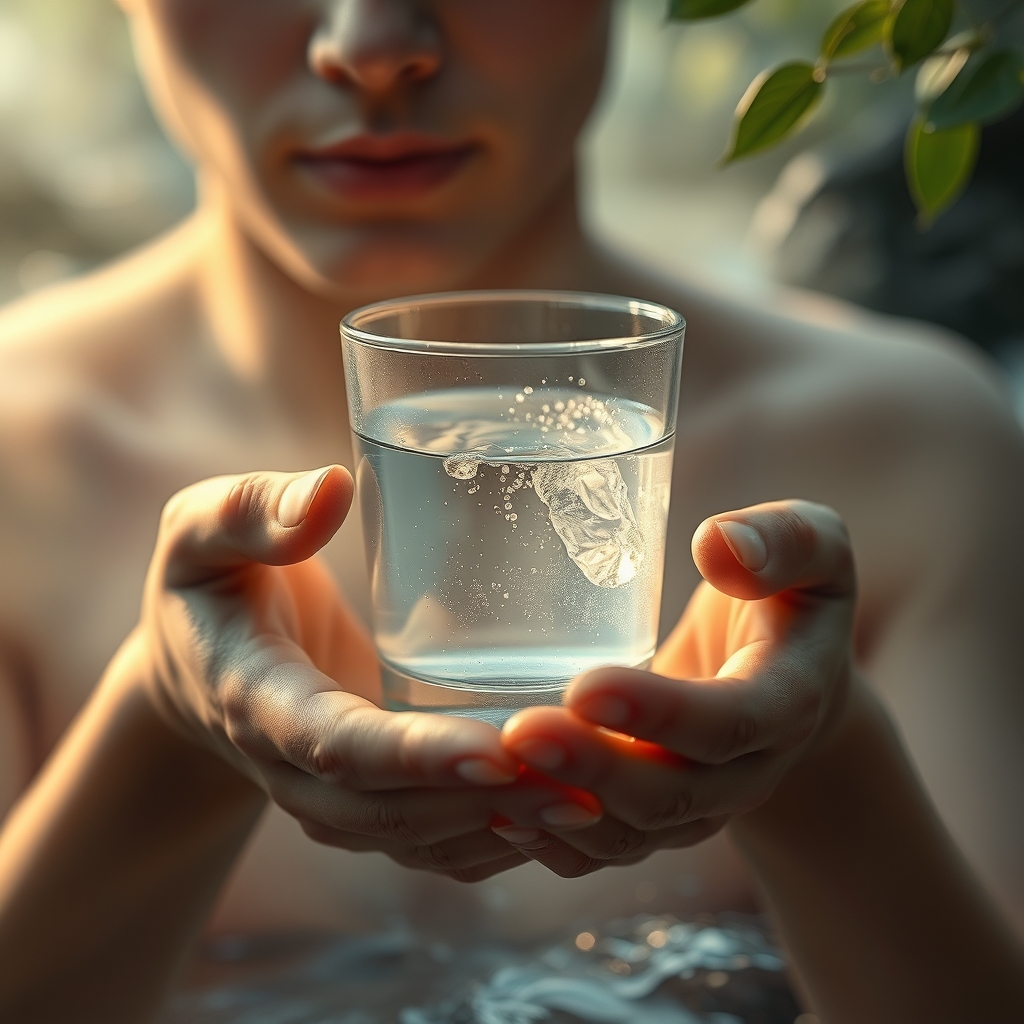
There is a quiet magic in the ritual of pouring water. The way the light catches the glass, the sound of ice clinking against porcelain, the first cool touch against the lips—these are not incidental details. They are invitations to presence. In a world that moves at the speed of notifications, pausing to drink is an act of defiance. It is a refusal to let the body be swept along by the current of busyness, a choice to anchor oneself in the moment.
Try this: before you drink, hold the glass in both hands. Feel its weight. Notice the way the water trembles slightly, as if alive. Take a breath. Then drink slowly, not just to hydrate, but to remember. Remember that the body is not a vessel to be filled, but a river to be honored. Remember that every sip is a step toward balance, a small act of resistance against the forces that would have us live disconnected, distracted, depleted.
The Hidden Currents of Hydration
Hydration is not just about what we drink; it is about what we eat. The body draws water from the foods we choose, from the crisp bite of a cucumber, the juicy burst of a watermelon, the tender flesh of a steamed vegetable. A diet rich in whole, water-dense foods is like feeding the river from its banks—it ensures that the flow remains steady, that the current does not falter. Conversely, processed foods, heavy with salt and preservatives, act like dams, slowing the body’s natural rhythms, leaving us sluggish and parched.
And then there is the water we do not see—the water lost through sweat, through breath, through the quiet work of living. On days of exertion, of heat, of stress, the body’s demand for water increases, yet how often do we ignore its calls? We push through fatigue, through headaches, through the dull ache of muscles that have forgotten what it is to be supple. We mistake thirst for hunger, reaching for snacks when what we truly need is the simple, profound act of replenishment.
The Flow of Intention
To hydrate with intention is to listen. It is to recognize that the body’s signals are not inconveniences, but guides. It is to understand that the dryness of the mouth is not just a request for water, but an invitation to slow down, to reconnect, to remember that wellness is not a destination, but a way of moving through the world. It is to choose, again and again, the path of flow over the path of resistance.
There is a story in every glass of water. A story of glaciers melting into rivers, of rain falling on distant mountains, of roots drinking deep from the earth. When we drink, we do not just take; we become part of that story. We become part of the great, unending cycle of giving and receiving, of movement and stillness, of life and renewal. The river within us does not ask for much—just that we remember it is there, that we honor its flow, that we let it carry us, gently, toward the next moment, and the next, and the next.