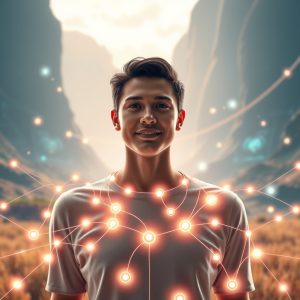
The Luminous Web: How the Dance of Hydration and Movement Weaves the Soul’s Resilience

The body is not a machine, though we often treat it as one—fueling it with precision, timing its rest like a factory shift, measuring its output in steps and calories. But what if we allowed ourselves to see it instead as a living, breathing ecosystem? A delicate web of rivers and roots, where every sip of water and every stretch of muscle is a thread in the luminous tapestry of being. This is the quiet revelation that comes when we slow down enough to listen—not just to the hunger in our stomachs, but to the deeper thirst of the soul, the one that asks for more than nutrients. It asks for rhythm.
The River That Runs Through Us
Water is the first language of the body. It flows through us before we are born, cradling us in the dark warmth of the womb, and it continues to sustain us long after we take our first breath. Yet, in the rush of daily life, we forget to speak this language. We sip absently from plastic bottles while scrolling through screens, or we chug coffee to jolt ourselves awake, only to crash hours later, parched and brittle. Hydration is not merely a biological necessity; it is a sacred dialogue between the self and the world. When we drink mindfully—when we pause to feel the coolness of the glass against our palms, the way the water slides down our throats like liquid light—we remember that we are not separate from the earth. We are made of the same stuff as the rivers and the rain.
Science tells us that proper hydration lubricates joints, regulates temperature, and flushes toxins from our cells. But the body knows more than science can measure. It knows the way a single glass of water at dawn can feel like a baptism, washing away the residue of yesterday’s fatigue. It knows the quiet joy of a long walk after rain, when the air is thick with the scent of wet earth, and every breath feels like a sip from the sky. To hydrate is to participate in the great cycle of renewal—to acknowledge that we, too, are part of the water’s journey.
The Poetry of Movement
If hydration is the river, then movement is the current that carries it. We live in an age that glorifies extremes—marathon runners and iron-pumping warriors, bodies sculpted into unnatural shapes by the relentless pursuit of perfection. But what if fitness was not about punishment, but about poetry? What if we moved not to shrink ourselves, but to expand into the fullness of our being?
The body is a storyteller. It remembers the way our ancestors crouched to gather berries, the way they danced under the moon to celebrate the harvest. When we move with intention—when we stretch like a cat waking from a nap, or walk with the slow deliberation of someone who has nowhere to be—we are not just burning calories. We are reclaiming our place in the ancient rhythm of life. A home workout is not a lesser version of the gym; it is a sanctuary. The mat becomes sacred ground, the dumbbells tools of transformation, the mirror a portal to self-awareness. There is no audience here, no judgment. Only the quiet conversation between breath and bone.
The Alchemy of Small Moments
Holistic wellness is not a destination; it is a series of small, luminous moments strung together like beads on a necklace. The way you choose an apple over a bag of chips not because you are on a diet, but because the crisp sweetness feels like a gift to your future self. The way you pause mid-stride to stretch your arms toward the sky, feeling the pull of muscles that have carried you through a thousand days. The way you drink a glass of water slowly, savoring it like a fine wine, because you understand that nourishment is not just about survival—it is about reverence.
These moments are not grand gestures. They do not require expensive supplements or elaborate meal plans. They require only presence—the willingness to listen to the body’s quiet whispers, to honor its needs without judgment or guilt. The gut does not speak in words, but in sensations: the gurgle of hunger, the heaviness of overindulgence, the lightness of a meal that agrees with you. The mind, too, has its own language—the fog of dehydration, the clarity of a well-hydrated brain, the way a single deep breath can dissolve stress like sugar in warm tea.
The Unseen Threads of Resilience
Resilience is not the absence of struggle; it is the ability to bend without breaking, to flow like water around the obstacles in our path. When we nurture our bodies with mindful hydration and movement, we are not just building physical strength. We are weaving a web of resilience that extends far beyond the muscles and bones. We are teaching ourselves to adapt, to find grace in discomfort, to trust that even on the days when we feel weak, we are still whole.
Consider the way a tree sways in the wind. It does not resist the storm; it bends, its roots anchored deep in the earth, its leaves drinking in the rain. This is the wisdom of the body. It knows how to endure. It knows that every sip of water, every stretch of the limbs, is an act of faith—a belief that the next moment will hold something beautiful, even if we cannot see it yet. The luminous web of wellness is not something we build once and then possess. It is something we tend to daily, with patience and love, trusting that the threads we weave today will hold us tomorrow.
And so, we return to the river. We return to the quiet joy of movement, the sacred pause of a deep breath, the simple act of drinking water as if it were a prayer. These are not just habits; they are rituals. They are the way we remember that we are alive, that we are part of something vast and mysterious, that our bodies are not machines to be optimized, but temples to be honored. The web we weave is not just ours—it is connected to the rivers and the trees, to the ancestors who danced and the children who will one day drink from the same streams. To tend to our wellness is to tend to the world. And in that tending, we find not just health, but meaning.